

Our Blog
Stay updated with the latest insights, trends, and success stories from the world of experiential marketing and interactive event technology.
Latest Articles
Insights, tips, and stories from the world of experiential marketing
5 Interactive Technologies That Boost Guest Engagement
Brand activations are evolving from passive displays to immersive, participatory experiences. In 2026, interactive technology is no longer a luxury but a necessity for consumer brands aiming to capture attention and forge lasting connections with their audience.
These dynamic tools significantly increase dwell time and social sharing rates, often by 3-4x compared to static content. Understanding what makes technology truly interactive—allowing guests to influence the experience directly is crucial for maximizing engagement and measurable ROI.
Why Interactive Technology Transforms Brand Activations
Interactive technology shifts the paradigm from consumers merely observing a brand to actively participating in its story. This fundamental change is driven by a desire for more authentic and memorable experiences, particularly as digital fatigue grows.
Marketers report 52.6% more engagement from interactive formats compared to static content, according to Taradel research. This increased engagement translates directly into higher brand recall and stronger emotional resonance, critical for success in a crowded market.
Interactive content is 93% more effective at educating buyers than static options.
Brand loyalty can increase by 30% through interactive experiences.
91% of customers feel more optimistic about a brand after participating in an activation.
Interactive technology empowers guests to co-create their experience, fostering a deeper connection than traditional marketing can achieve, as highlighted by Black Diamond Agency.
#1: Gesture-Controlled Projection Mapping
Gesture-controlled projection mapping allows guests to manipulate visual content on large surfaces using their body movements, eliminating the need for wearables or external devices. This technology transforms static environments into dynamic, responsive canvases.
Guests can interact with virtual objects, trigger animations, or navigate through brand narratives simply by waving, stepping, or pointing. This creates a sense of magic and direct agency, making the experience highly memorable.
Real-time product reveals become engaging puzzles guests solve with movement.
Gamified brand stories can involve guests physically interacting with projected characters or elements.
Interactive photo moments generate unique, shareable content as guests become part of the visual display.
While average engagement time for static displays is often under 30 seconds, gesture-controlled projection mapping captivates guests for 4-7 minutes per interaction, demonstrating its power to hold attention. Implementation costs for interactive projection mapping can range from $20,000–$50,000+ for custom content, with advanced setups exceeding $120,000–$350,000 for corporate events according to MT Projection's 2026 budgeting guide.
#2: AI-Powered Personalization Stations
AI-powered personalization stations deliver real-time, bespoke experiences by analyzing guest input or biometric data to generate tailored content or product recommendations. This moves beyond generic interactions to deeply relevant engagements.
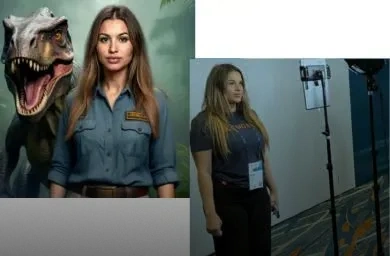
These stations use artificial intelligence to understand individual preferences, creating a one-to-one brand dialogue. The perceived value of a customized experience significantly boosts satisfaction and recall.
Guests can create custom flavor combinations for beverages or snacks based on AI-driven preference mapping.
AI styling sessions recommend apparel or accessories tailored to individual body types and style choices.
Personalized packaging design allows guests to see their name or unique message integrated into brand collateral.
These stations excel at data capture, with many brands reporting 60-70% opt-in rates for follow-up marketing, according to Envive.ai research. While AI adoption in marketing is high (91% of marketers use AI per Jasper's 2026 report), ensuring clear privacy policies and transparent data usage is paramount to build trust and compliance.
#3: Social Media Integration Walls with Live Gamification
Social media integration walls, enhanced with live gamification, transform passive hashtag feeds into competitive, engaging experiences. This goes beyond simple content display to actively encourage user-generated content (UGC) and real-time interaction.
By incorporating leaderboards, live challenges, and instant voting, brands can incentivize guests to share their experiences. This creates a dynamic, public forum for brand advocacy and community building.
Real-time leaderboards display top social sharers, driving competitive posting by 5-8x.
Interactive polls or quizzes related to the brand encourage immediate participation and sharing of results.
Photo or video challenges with live submission displays foster creative content generation and peer engagement.
Gamified campaigns produce 100-150% higher engagement than non-gamified ones, as noted by Odicci. Effective moderation technology is essential to maintain brand safety and ensure all displayed content aligns with brand values, making the experience rewarding without feeling transactional.
#4: Haptic Feedback and Sensory Technology
Haptic feedback and other sensory technologies move beyond visual and auditory engagement, allowing guests to physically feel product attributes or immerse themselves in simulated environments. This multisensory approach creates deeper memory encoding.
By stimulating touch, temperature, or even scent, brands can communicate product benefits in a highly visceral way. This direct sensory input builds a more complete and authentic perception of the brand.
Beauty brands can simulate the texture of a cream or the feel of a fabric through haptic surfaces.
Automotive activations can replicate road vibrations or engine purrs to convey performance.
Food and beverage brands might use scent diffusers alongside tasting experiences to enhance flavor perception.
Multisensory engagement creates 2x stronger memory encoding than visual-only experiences, with retention rates jumping to over 50% when two or more senses are combined, according to Tansley. The haptic technology market is projected to reach $13.32 billion in 2026, per Data Insights Market, indicating a growing accessibility of diverse equipment, from simple vibrating elements to advanced kinesthetic systems.
#5: AR Try-On and Virtual Product Interaction
Augmented Reality (AR) try-on and virtual product interaction allow guests to digitally overlay products onto themselves or their environment in real-time. This technology offers a risk-free way to experience products without physical inventory.
Whether via a web browser (WebAR) or a dedicated application, AR bridges the gap between digital visualization and physical presence. This enables comprehensive product exploration and customization.
Beauty brands offer virtual makeup try-ons, letting guests experiment with shades and styles.
Apparel companies allow virtual try-on of clothing, visualizing how garments fit and look.
Furniture brands enable guests to place virtual products in their home environment to assess scale and style.
WebAR experiences are increasingly preferred due to zero app download friction, especially given that the average consumer downloads zero new apps per month by 2026, according to Cylindo. AR experiences boast a significant share-ability factor, with 40% of AR users sharing their experience on social media, amplifying brand reach organically per Banuba.
Choosing the Right Technology for Your Activation Goals
Selecting the optimal interactive technology requires a strategic decision-making process. ThePACE Framework (Purpose-Audience-Capacity-Experience)provides a robust methodology for matching technology to your specific activation goals and constraints.
This framework involves scoring each interactive technology against your objectives (awareness, conversion, data capture) and venue constraints (space, power, staffing) to identify the optimal mix rather than simply chasing trends.
Purpose:Clearly define primary objectives. Is the goal brand awareness, lead generation, direct sales conversion, or data capture?
Audience:Understand guest demographics and tech savviness. Will they prefer quick, shareable interactions or deeper, personalized engagements?
Capacity:Assess venue limitations, including available space, power infrastructure, internet connectivity, and the number of guests to be processed per hour.
Experience:Envision the desired emotional and functional outcome for the guest. How will the technology amplify the brand story and leave a lasting impression?
Event budgets for 2026 anticipate a 12% rise in costs, making strategic allocation crucial according to Bizzabo's 2026 report. Allocate a significant portion of your budget to technology if it directly supports your primary objectives, especially given that 47% of event marketers report in-person events have the highest ROI per Next Gen Event Co.
Measuring success goes beyond foot traffic; focus on metrics like dwell time, social shares, data capture rates, and post-event conversions. Common mistakes include underestimating technical requirements or failing to integrate the technology seamlessly into the overall brand narrative, which can lead to disjointed experiences.
Key Takeaways
Interactive technology significantly boosts guest engagement and social sharing compared to static activations.
Gesture-controlled projection mapping offers highly immersive, large-scale visual interactions.
AI-powered personalization stations deliver tailored experiences and exceptional data capture opportunities.
Social media integration walls with gamification drive user-generated content and competitive engagement.
Haptic feedback and sensory technology create deeper memory encoding through multisensory experiences.
AR try-on and virtual product interaction provide accessible, shareable product exploration.
The PACE Framework helps align technology choices with specific brand objectives and logistical constraints.
Conclusion: Creating Memorable Experiences Through Strategic Technology Use
The future of brand activations in 2026 is undeniably interactive, driven by consumer demand for authentic and memorable experiences. The five technologies discussed—gesture-controlled projection mapping, AI-powered personalization stations, social media integration walls, haptic feedback, and AR try-on—each offer unique advantages for boosting guest engagement.
The strategic implementation of these tools, guided by frameworks like PACE, ensures that technology amplifies your brand story rather than overshadowing it. This approach leads to higher dwell times, increased social sharing, and deeper emotional connections, ultimately delivering a superior return on experience.
As the experiential marketing landscape continues to evolve, embracing these interactive technologies is essential for creating activations that resonate deeply and forge lasting brand loyalty, future-proofing your strategy for emerging innovations.
Frequently Asked Questions
What is the most cost-effective interactive technology for small brand activations?
Social media integration walls with basic gamification are generally the most cost-effective entry point for smaller brand activations. Costs can start around $5,000 for simple setups, offering high social sharing potential without extensive hardware investment.
How do you measure ROI on interactive technology at brand activations?
ROI on interactive technology is measured through a combination of metrics including dwell time, data capture rates (e.g., email opt-ins), social media impressions and reach from user-generated content, and post-event sales or lead conversions attributed to the activation. Advanced analytics and CRM integration are essential for tracking these outcomes.
What interactive technology generates the most social media content?
Social media integration walls with live gamification tend to generate the most social media content, with gamified campaigns achieving 100-150% higher engagement than non-gamified ones per Odicci. AR try-on experiences also have a high share-ability factor, with 40% of users sharing their AR content on social media according to Banuba.
Do you need a dedicated tech team to run interactive brand activations?
For complex interactive activations like custom projection mapping or advanced AI personalization, a dedicated tech team is often required for setup, calibration, and on-site support. Simpler solutions like WebAR or basic social walls can sometimes be managed by trained event staff with technical oversight from vendors.
How much space do interactive technology installations require?
Space requirements vary significantly: AR try-on and AI personalization stations can fit into compact footprints (e.g., 5x5 ft for a kiosk). Social media walls need a visible display area, while gesture-controlled projection mapping demands larger, unobstructed surfaces and clear interaction zones, potentially spanning entire walls or floors.
What is the best interactive technology for capturing guest data?
AI-powered personalization stations are highly effective for capturing guest data, with 60-70% opt-in rates for follow-up marketing as reported by Envive.ai. These stations can gather explicit preferences and often integrate directly with CRM systems, providing rich, qualified leads.
How long does it take to set up interactive technology at an activation?
Setup times range from 2-4 hours for simpler WebAR or pre-configured social media walls, to 1-2 days for AI personalization stations requiring integration, and 2-3 days for complex gesture-controlled projection mapping setups involving content calibration and sensor placement.
Which interactive technology works best for outdoor brand activations?
For outdoor activations, WebAR and app-based AR are excellent choices as they leverage guests' mobile devices and are less impacted by weather or direct sunlight. Projection mapping requires darkness for optimal visibility, and haptic systems need protected environments, making them less ideal for open outdoor settings.
Is gesture-controlled technology reliable enough for high-traffic events?
Modern gesture-controlled technology is highly reliable for high-traffic events, utilizing advanced sensors like LiDAR and depth cameras for accurate tracking. Proper calibration, clear instruction, and redundancy in hardware ensure smooth operation, even with large crowds, though potential shadow interference needs to be managed for optimal performance.
What interactive technology has the longest guest engagement time?
Gesture-controlled projection mapping typically leads in engagement time, captivating guests for 4-7 minutes per interaction according to Utsubo. AI-powered personalization stations also achieve strong dwell times, averaging 2-5 minutes as guests explore tailored recommendations and unique creations.
Key Terms Glossary
Brand Activation:A marketing strategy that engages consumers directly with a brand, often through experiences, to build awareness, foster loyalty, and drive sales.
Dwell Time:The amount of time a guest spends interacting with a specific installation or area within an activation.
Gamification:The application of game-design elements and game principles in non-game contexts to engage users and solve problems.
Haptic Feedback:Technology that recreates the sense of touch by applying forces, vibrations, or motions to the user.
Projection Mapping:A projection technology used to turn objects, often irregularly shaped, into display surfaces for video projection.
User-Generated Content (UGC):Any form of content, such as images, videos, text, and audio, that has been created and posted by unpaid contributors rather than by brands.
WebAR:Augmented reality experiences accessible directly through a web browser, eliminating the need for a dedicated app download.

5 Interactive Technologies That Boost Guest Engagement
Brand activations are evolving from passive displays to immersive, participatory experiences. In 2026, interactive technology is no longer a luxury but a necessity for consumer brands aiming to capture attention and forge lasting connections with their audience.
These dynamic tools significantly increase dwell time and social sharing rates, often by 3-4x compared to static content. Understanding what makes technology truly interactive—allowing guests to influence the experience directly is crucial for maximizing engagement and measurable ROI.
Why Interactive Technology Transforms Brand Activations
Interactive technology shifts the paradigm from consumers merely observing a brand to actively participating in its story. This fundamental change is driven by a desire for more authentic and memorable experiences, particularly as digital fatigue grows.
Marketers report 52.6% more engagement from interactive formats compared to static content, according to Taradel research. This increased engagement translates directly into higher brand recall and stronger emotional resonance, critical for success in a crowded market.
Interactive content is 93% more effective at educating buyers than static options.
Brand loyalty can increase by 30% through interactive experiences.
91% of customers feel more optimistic about a brand after participating in an activation.
Interactive technology empowers guests to co-create their experience, fostering a deeper connection than traditional marketing can achieve, as highlighted by Black Diamond Agency.
#1: Gesture-Controlled Projection Mapping
Gesture-controlled projection mapping allows guests to manipulate visual content on large surfaces using their body movements, eliminating the need for wearables or external devices. This technology transforms static environments into dynamic, responsive canvases.
Guests can interact with virtual objects, trigger animations, or navigate through brand narratives simply by waving, stepping, or pointing. This creates a sense of magic and direct agency, making the experience highly memorable.
Real-time product reveals become engaging puzzles guests solve with movement.
Gamified brand stories can involve guests physically interacting with projected characters or elements.
Interactive photo moments generate unique, shareable content as guests become part of the visual display.
While average engagement time for static displays is often under 30 seconds, gesture-controlled projection mapping captivates guests for 4-7 minutes per interaction, demonstrating its power to hold attention. Implementation costs for interactive projection mapping can range from $20,000–$50,000+ for custom content, with advanced setups exceeding $120,000–$350,000 for corporate events according to MT Projection's 2026 budgeting guide.
#2: AI-Powered Personalization Stations
AI-powered personalization stations deliver real-time, bespoke experiences by analyzing guest input or biometric data to generate tailored content or product recommendations. This moves beyond generic interactions to deeply relevant engagements.
These stations use artificial intelligence to understand individual preferences, creating a one-to-one brand dialogue. The perceived value of a customized experience significantly boosts satisfaction and recall.
Guests can create custom flavor combinations for beverages or snacks based on AI-driven preference mapping.
AI styling sessions recommend apparel or accessories tailored to individual body types and style choices.
Personalized packaging design allows guests to see their name or unique message integrated into brand collateral.
These stations excel at data capture, with many brands reporting 60-70% opt-in rates for follow-up marketing, according to Envive.ai research. While AI adoption in marketing is high (91% of marketers use AI per Jasper's 2026 report), ensuring clear privacy policies and transparent data usage is paramount to build trust and compliance.
#3: Social Media Integration Walls with Live Gamification
Social media integration walls, enhanced with live gamification, transform passive hashtag feeds into competitive, engaging experiences. This goes beyond simple content display to actively encourage user-generated content (UGC) and real-time interaction.
By incorporating leaderboards, live challenges, and instant voting, brands can incentivize guests to share their experiences. This creates a dynamic, public forum for brand advocacy and community building.
Real-time leaderboards display top social sharers, driving competitive posting by 5-8x.
Interactive polls or quizzes related to the brand encourage immediate participation and sharing of results.
Photo or video challenges with live submission displays foster creative content generation and peer engagement.
Gamified campaigns produce 100-150% higher engagement than non-gamified ones, as noted by Odicci. Effective moderation technology is essential to maintain brand safety and ensure all displayed content aligns with brand values, making the experience rewarding without feeling transactional.
#4: Haptic Feedback and Sensory Technology
Haptic feedback and other sensory technologies move beyond visual and auditory engagement, allowing guests to physically feel product attributes or immerse themselves in simulated environments. This multisensory approach creates deeper memory encoding.
By stimulating touch, temperature, or even scent, brands can communicate product benefits in a highly visceral way. This direct sensory input builds a more complete and authentic perception of the brand.
Beauty brands can simulate the texture of a cream or the feel of a fabric through haptic surfaces.
Automotive activations can replicate road vibrations or engine purrs to convey performance.
Food and beverage brands might use scent diffusers alongside tasting experiences to enhance flavor perception.
Multisensory engagement creates 2x stronger memory encoding than visual-only experiences, with retention rates jumping to over 50% when two or more senses are combined, according to Tansley. The haptic technology market is projected to reach $13.32 billion in 2026, per Data Insights Market, indicating a growing accessibility of diverse equipment, from simple vibrating elements to advanced kinesthetic systems.
#5: AR Try-On and Virtual Product Interaction
Augmented Reality (AR) try-on and virtual product interaction allow guests to digitally overlay products onto themselves or their environment in real-time. This technology offers a risk-free way to experience products without physical inventory.
Whether via a web browser (WebAR) or a dedicated application, AR bridges the gap between digital visualization and physical presence. This enables comprehensive product exploration and customization.
Beauty brands offer virtual makeup try-ons, letting guests experiment with shades and styles.
Apparel companies allow virtual try-on of clothing, visualizing how garments fit and look.
Furniture brands enable guests to place virtual products in their home environment to assess scale and style.
WebAR experiences are increasingly preferred due to zero app download friction, especially given that the average consumer downloads zero new apps per month by 2026, according to Cylindo. AR experiences boast a significant share-ability factor, with 40% of AR users sharing their experience on social media, amplifying brand reach organically per Banuba.
Choosing the Right Technology for Your Activation Goals
Selecting the optimal interactive technology requires a strategic decision-making process. ThePACE Framework (Purpose-Audience-Capacity-Experience)provides a robust methodology for matching technology to your specific activation goals and constraints.
This framework involves scoring each interactive technology against your objectives (awareness, conversion, data capture) and venue constraints (space, power, staffing) to identify the optimal mix rather than simply chasing trends.
Purpose:Clearly define primary objectives. Is the goal brand awareness, lead generation, direct sales conversion, or data capture?
Audience:Understand guest demographics and tech savviness. Will they prefer quick, shareable interactions or deeper, personalized engagements?
Capacity:Assess venue limitations, including available space, power infrastructure, internet connectivity, and the number of guests to be processed per hour.
Experience:Envision the desired emotional and functional outcome for the guest. How will the technology amplify the brand story and leave a lasting impression?
Event budgets for 2026 anticipate a 12% rise in costs, making strategic allocation crucial according to Bizzabo's 2026 report. Allocate a significant portion of your budget to technology if it directly supports your primary objectives, especially given that 47% of event marketers report in-person events have the highest ROI per Next Gen Event Co.
Measuring success goes beyond foot traffic; focus on metrics like dwell time, social shares, data capture rates, and post-event conversions. Common mistakes include underestimating technical requirements or failing to integrate the technology seamlessly into the overall brand narrative, which can lead to disjointed experiences.
Key Takeaways
Interactive technology significantly boosts guest engagement and social sharing compared to static activations.
Gesture-controlled projection mapping offers highly immersive, large-scale visual interactions.
AI-powered personalization stations deliver tailored experiences and exceptional data capture opportunities.
Social media integration walls with gamification drive user-generated content and competitive engagement.
Haptic feedback and sensory technology create deeper memory encoding through multisensory experiences.
AR try-on and virtual product interaction provide accessible, shareable product exploration.
The PACE Framework helps align technology choices with specific brand objectives and logistical constraints.
Conclusion: Creating Memorable Experiences Through Strategic Technology Use
The future of brand activations in 2026 is undeniably interactive, driven by consumer demand for authentic and memorable experiences. The five technologies discussed—gesture-controlled projection mapping, AI-powered personalization stations, social media integration walls, haptic feedback, and AR try-on—each offer unique advantages for boosting guest engagement.
The strategic implementation of these tools, guided by frameworks like PACE, ensures that technology amplifies your brand story rather than overshadowing it. This approach leads to higher dwell times, increased social sharing, and deeper emotional connections, ultimately delivering a superior return on experience.
As the experiential marketing landscape continues to evolve, embracing these interactive technologies is essential for creating activations that resonate deeply and forge lasting brand loyalty, future-proofing your strategy for emerging innovations.
Frequently Asked Questions
What is the most cost-effective interactive technology for small brand activations?
Social media integration walls with basic gamification are generally the most cost-effective entry point for smaller brand activations. Costs can start around $5,000 for simple setups, offering high social sharing potential without extensive hardware investment.
How do you measure ROI on interactive technology at brand activations?
ROI on interactive technology is measured through a combination of metrics including dwell time, data capture rates (e.g., email opt-ins), social media impressions and reach from user-generated content, and post-event sales or lead conversions attributed to the activation. Advanced analytics and CRM integration are essential for tracking these outcomes.
What interactive technology generates the most social media content?
Social media integration walls with live gamification tend to generate the most social media content, with gamified campaigns achieving 100-150% higher engagement than non-gamified ones per Odicci. AR try-on experiences also have a high share-ability factor, with 40% of users sharing their AR content on social media according to Banuba.
Do you need a dedicated tech team to run interactive brand activations?
For complex interactive activations like custom projection mapping or advanced AI personalization, a dedicated tech team is often required for setup, calibration, and on-site support. Simpler solutions like WebAR or basic social walls can sometimes be managed by trained event staff with technical oversight from vendors.
How much space do interactive technology installations require?
Space requirements vary significantly: AR try-on and AI personalization stations can fit into compact footprints (e.g., 5x5 ft for a kiosk). Social media walls need a visible display area, while gesture-controlled projection mapping demands larger, unobstructed surfaces and clear interaction zones, potentially spanning entire walls or floors.
What is the best interactive technology for capturing guest data?
AI-powered personalization stations are highly effective for capturing guest data, with 60-70% opt-in rates for follow-up marketing as reported by Envive.ai. These stations can gather explicit preferences and often integrate directly with CRM systems, providing rich, qualified leads.
How long does it take to set up interactive technology at an activation?
Setup times range from 2-4 hours for simpler WebAR or pre-configured social media walls, to 1-2 days for AI personalization stations requiring integration, and 2-3 days for complex gesture-controlled projection mapping setups involving content calibration and sensor placement.
Which interactive technology works best for outdoor brand activations?
For outdoor activations, WebAR and app-based AR are excellent choices as they leverage guests' mobile devices and are less impacted by weather or direct sunlight. Projection mapping requires darkness for optimal visibility, and haptic systems need protected environments, making them less ideal for open outdoor settings.
Is gesture-controlled technology reliable enough for high-traffic events?
Modern gesture-controlled technology is highly reliable for high-traffic events, utilizing advanced sensors like LiDAR and depth cameras for accurate tracking. Proper calibration, clear instruction, and redundancy in hardware ensure smooth operation, even with large crowds, though potential shadow interference needs to be managed for optimal performance.
What interactive technology has the longest guest engagement time?
Gesture-controlled projection mapping typically leads in engagement time, captivating guests for 4-7 minutes per interaction according to Utsubo. AI-powered personalization stations also achieve strong dwell times, averaging 2-5 minutes as guests explore tailored recommendations and unique creations.
Key Terms Glossary
Brand Activation:A marketing strategy that engages consumers directly with a brand, often through experiences, to build awareness, foster loyalty, and drive sales.
Dwell Time:The amount of time a guest spends interacting with a specific installation or area within an activation.
Gamification:The application of game-design elements and game principles in non-game contexts to engage users and solve problems.
Haptic Feedback:Technology that recreates the sense of touch by applying forces, vibrations, or motions to the user.
Projection Mapping:A projection technology used to turn objects, often irregularly shaped, into display surfaces for video projection.
User-Generated Content (UGC):Any form of content, such as images, videos, text, and audio, that has been created and posted by unpaid contributors rather than by brands.
WebAR:Augmented reality experiences accessible directly through a web browser, eliminating the need for a dedicated app download.
XMP Dubai
Bringing unforgettable experiential marketing and event technology experiences to life across the Middle East.


QUICK LINKS
Our Services
Contact Us
MC-14, Office #572, Hamsah A building
Unique World Business Center
P.O. Box 87556
AL Karma, Dubai, UAE
Copyright 2026. XMP Dubai. All Rights Reserved.
Designed & Built by The PartyPlatform